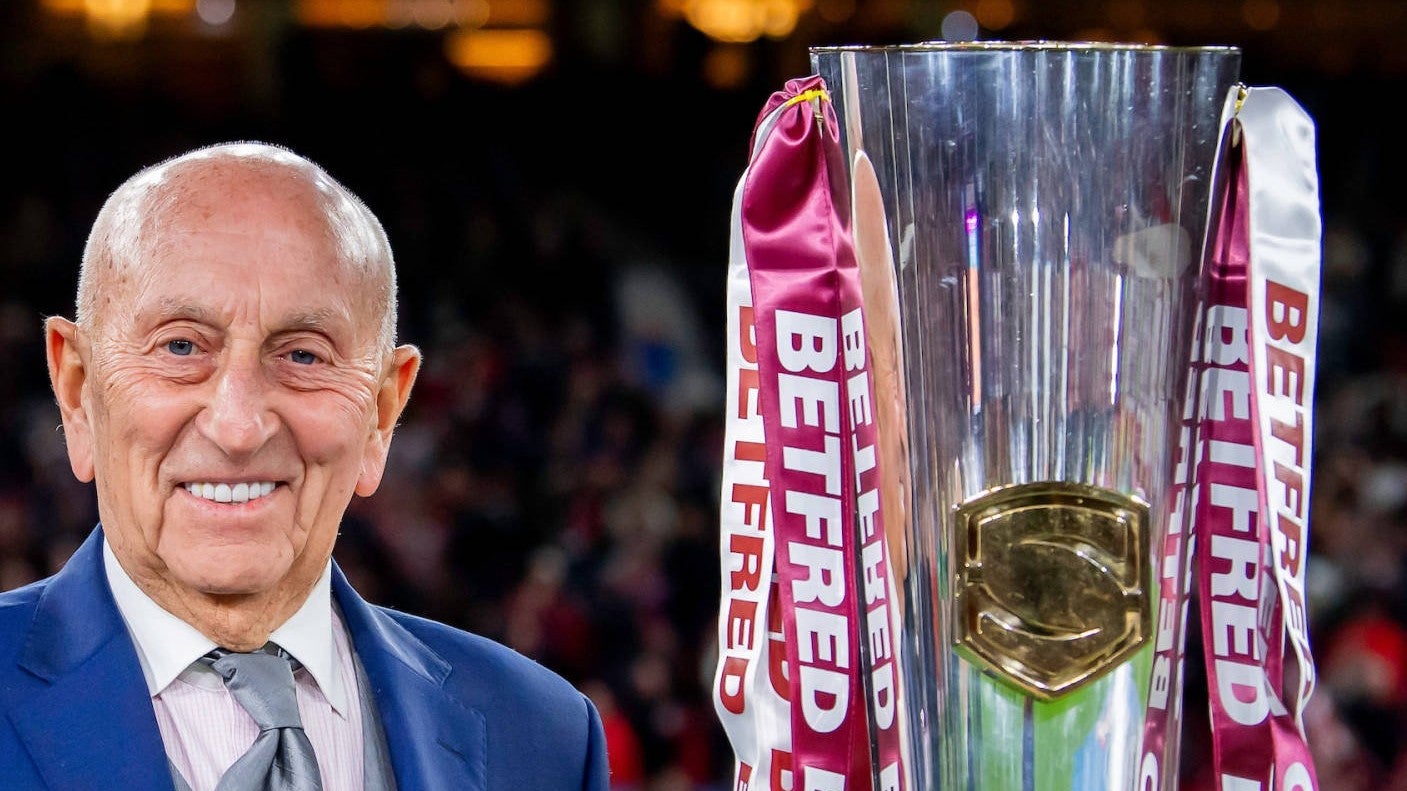
Rugby league is about to lose the name that has sat on top of its biggest competition for a decade. Betfred has confirmed that it will not renew its title sponsorship of Super League, and the 2026 Grand Final at Old Trafford on Saturday 3 October will be the last time the trophy carries the bookmaker's name. According to Gambling.com, the exit also covers the Challenge Cup and England Rugby League, which means the sport is losing its single most important commercial partner in one go.
The decision was set out by Betfred founder and chairman Fred Done in The Sunday Times and confirmed by RL Commercial, the body that sells the sport's media, marketing and events rights. Done did not hide his feelings. "As much as it breaks my heart, we have decided not to renew our sponsorship of Rugby League," he wrote, as quoted by SBC News. He also left no doubt about the cause: "Regrettably, following last year's extremely disappointing Budget," Sportcal quoted him as saying, "it has been necessary to review all Betfred spending."
For anyone who works in sports sponsorship, this is more than a story about one bookmaker and one league. It is a clear sign that higher UK gambling taxes are now flowing straight through to the money that betting brands put into sport. The sports betting and online gambling industry has long been one of the most reliable buyers of rights in British sport, and that reliability is being tested. Below we look at how the Betfred deal grew, why it is ending, what it means for rights holders, and what operators and sports properties everywhere, including in Dubai and the wider UAE, can learn from it.
Betfred first became title sponsor of the men's Super League in 2017. The relationship then spread across almost every corner of the sport. SBC News and Gambling.com both list the stages: the Championship and League One were added in 2018, the Women's Super League in 2019, the Challenge Cup and the Wheelchair Super League in 2021, and the England national teams in 2022. Few sponsorships in British sport have expanded so steadily across men's, women's and wheelchair competitions at the same time.
The latest agreement was unveiled in October 2023. Sportcal reported at the time that RL Commercial had extended and expanded the partnership until 2026, with Betfred taking title rights to the men's, women's and wheelchair Challenge Cup, the women's and wheelchair Super League, and shirt sponsorship of the England men's, women's and wheelchair teams. The three year deal was described as the most significant and wide ranging in the sport's history and was worth 25 per cent more than the previous record agreement. Sportcal now puts its value at more than £3 million a year, citing GlobalData Sport.
Rhodri Jones, who leads RL Commercial and is also interim chief executive of the Rugby Football League, said in 2023 that the extra revenue would be "vital in allowing us to deliver greater financial sustainability". That line matters today. A sport that built part of its budget on a growing title deal now has to replace it, and quickly, because the new season begins early in 2027.
The bond was also personal. Done, a Salford native, told The Sunday Times that Betfred started sponsoring Super League "because we saw it as an important northern sport", according to SBC News. In February 2026, Betfred's head of corporate affairs and communications Mark Pearson told SBC News that it was the company's "tenth season of sponsoring the Betfred Super League and the partnership has become part of our brand." Sponsorships rarely become that embedded, which is exactly why their end sends such a strong signal.
Done was blunt about the economics. "In July, a combination of wage inflation and tax rises forced us to announce the closure of 132 shops," he wrote, as quoted by Gambling.com. SBC News reported that those closures cost around 600 jobs, £17.8 million in taxes and £4.2 million a year in payments to horseracing. Insider Sport adds that Betfred's retail estate has shrunk from a peak of 1,680 shops to just over 1,090.
The pressure comes from several directions. Done pointed to increases in employer National Insurance, the national minimum wage, remote gaming duty and general betting duty, according to Insider Sport. The Autumn Budget of 2025 raised remote gaming duty, the tax on online casino and other remote gaming products, from 21 per cent to 40 per cent from April 2026. A new 25 per cent rate on online sports betting is due from 2027, up from 15 per cent, with horse racing excluded, according to Gambling.com and Casinos.com.
The next threat is Machine Games Duty, the tax on gaming machine takings in betting shops, casinos, bingo halls and arcades. Casinos.com reports that the standard band currently sits at 20 per cent. Done warned that doubling it to 40 per cent would force Betfred to close 495 shops, or 45 per cent of its estate, Insider Sport reported. Casinos.com put the potential job losses at around 2,475.
That threat now hangs over Betfred's other flagship sponsorship. The company backs all five British Classics, from the Derby and the Oaks to the St Leger and the two Guineas races. Done said there is a verbal agreement to renew that sponsorship for a further three years, "but if October's budget goes the wrong way on MGD, we will have to walk away from those too," as quoted by SBC News and Casinos.com. In other words, the rugby league decision may not be the last.
Betfred is not acting alone. Throughout 2026, betting brands have been cutting or reshaping their sponsorships in British sport, and horseracing has felt it first. Insider Sport reported in March that bet365 was ending its backing of the Craven and July meetings at Newmarket, which it had supported since 2017, and of the Old Newton Cup and Lancashire Oaks at Haydock, which it had supported since 2003. The company said last year's Budget "has unfortunately required bet365 to make some tough commercial choices".
Entain's Coral brand ended its 52 year association with the Coral Cup at the Cheltenham Festival, and SBC News reported that BetMGM pulled out of the Fighting Fifth Hurdle at Newcastle. A BetMGM spokesperson said the company continuously conducts "strategic reviews of our partnerships and sponsorship portfolio". SBC News also noted that Flutter and Evoke have confirmed marketing cuts.
The picture is not simply one of retreat, though. It is one of reallocation. Coral moved onto the front of Birmingham City's shirt, and bet365 remains a global partner of the UEFA Champions League, according to SBC News. Betfred itself still sponsors PDC darts through 2030, Sportcal reports, although it let its British Masters golf deal expire last year. TheLines suggested that Betfred may be shifting money towards horseracing, a sport tied closely to betting, rather than cutting its sports sponsorship budget across the board.
Regulation adds another layer. Premier League clubs agreed in April 2023 to remove gambling brands from the front of matchday shirts from the 2026/27 season, Sky Sports reported, while still allowing them on sleeves and advertising hoardings. Casinos.com notes that several Premier League clubs are losing gambling shirt sponsors under that voluntary ban, while Championship clubs have so far kept theirs. Put together, tax and regulation are pushing online gambling operators to ask far harder questions about where each pound of sponsorship goes.
For Super League, the timing is awkward but not hopeless. The competition has 14 clubs, 12 in the north of England and two in southern France, and its 2026 season began on 12 February, Sportcal notes. SBC News reports that the 2025 season drew a record 1.62 million fans. Jones described Betfred as "an outstanding partner across rugby league for nearly a decade" and added that, "on the back of a record-breaking Super League season, we're also excited for this next chapter."
RL Commercial says it has already taken "big steps" towards new partners across the men's, women's and wheelchair competitions and the England teams, according to Insider Sport. No replacement brands have been named. Insider Sport also notes that it is unclear whether the sport will look for one title partner or separate partners for each competition. Jones has argued that the next five years could be "the most significant" in the sport's modern era, pointing to Magic Weekend in Liverpool, the Vegas fixtures and growing broadcast reach. Sportcal adds that the Australian Rugby League Commission submitted a formal investment proposal to Super League in August, after talks with the ARLC and the NRL that began in 2025.
The broader lesson for rights holders is about concentration risk. When one partner holds the title rights to the top league, the cup, the women's game, the wheelchair game and the national teams, the departure of that partner removes a large share of income at once. The upside is that the inventory now on the table is wide. A sports property can sell a single umbrella deal or break it into several categories, each priced for a different kind of brand. That choice will shape how rugby league is positioned for the next cycle.
There is also a reputational side. A betting brand leaving because of tax pressure is a very different story from one leaving because of fan anger or regulatory action. Rugby league can present the vacancy as an opportunity to bring in new categories of sponsor, rather than as a sign that the product has lost value. Clear messaging around attendances, broadcast reach and fan data will be central to that pitch, and this is where strong media marketing and content strategy make a real difference.
The Betfred decision says a lot about how the UK iGaming market is changing. The biggest tax rise so far has landed on remote gaming, the online casino side of the business, while the new online sports betting rate arrives in 2027. Yet the immediate cuts are landing on sports sponsorship. That reflects how operators manage their budgets. Marketing is one of the few large costs a company can change quickly, so when margins tighten, sponsorship is often among the first lines to be reviewed.
The retail side tells a similar story. Betfred is a business with deep roots in the high street, and its shop estate is exposed to wage costs, National Insurance and the possible change in Machine Games Duty. TheLines reported that the Betting and Gaming Council warned that more pressure on licensed operators would damage the regulated sector and benefit the unlicensed market. That is the argument the industry will keep making ahead of the October Budget, and it is one that sports bodies have a direct interest in, because licensed operators are the ones that buy official sponsorships.
For international operators watching from outside the UK, the lesson is that tax policy is now a sponsorship variable. A sports betting brand planning a multi year deal needs to model what happens if duty rates change midway through the contract. A casino brand that relies on sports partnerships for brand awareness needs to understand how a rise in gaming duty might squeeze the budget for those partnerships. This kind of scenario planning is now a standard part of good iGaming consulting, and it applies equally to established markets and to newer regulated markets such as the UAE.
The first lesson is that long sponsorships build real brand equity, and walking away carries a cost. Betfred became part of the language of rugby league, and Pearson himself said the partnership had become part of the brand. Operators that cut deals purely on cost may save money in the short term but lose recognition that took years to build. Any review should weigh what the brand would need to spend to rebuild that awareness elsewhere.
The second lesson is to design flexibility into contracts. Deals that include break clauses linked to tax or regulatory change, or that let a sponsor step down from title rights to a smaller official partner role, give both sides room to adjust without a full exit. Bookmakers that negotiated rigid, long fixed fee deals before the Budget are now the ones facing the hardest choices.
The third lesson is about measurement. When budgets tighten, every sponsorship has to prove its return. Operators that can link a partnership to registrations, deposits, retention and audience reach in a clear way are in a stronger position to defend it internally. Activation through owned channels, digital advertising and social content often makes the difference between a deal that looks like a cost and one that looks like an investment. The operators that keep sponsoring sport through this period will be the ones that treat it as part of a full marketing system rather than a logo on a shirt.
Finally, operators should think about category fit. The move towards horseracing that TheLines described makes sense for a business whose customers are closely tied to racing. Other online gambling brands may find that darts, football, esports or a regional league gives them a better match between audience and product. The answer will differ for each company, and that is exactly why a careful review is better than a blanket cut. Independent iGaming consulting can help an operator test each partnership against its own customer data before deciding what to keep.
For clubs, leagues and event organisers, the Betfred exit is a reminder that the betting category can change faster than many contracts. Rights holders that relied heavily on a single gambling partner now need a wider spread of sponsors across finance, telecoms, travel, automotive, consumer goods and technology. Diversification reduces the risk of one budget decision wiping out a large share of income.
It also pays to package rights more cleverly. Super League's inventory now includes a title slot, cup rights, women's and wheelchair competitions and national team shirts. Each of these can appeal to a different type of brand. A company that wants to support inclusion might be drawn to wheelchair rugby league, while a brand chasing national visibility might prefer the England shirts. Selling the parts as well as the whole can sometimes raise more money than one large bundle.
Sports properties in the Gulf can take note as well. Clubs and events in Dubai and across the UAE are building their commercial programmes while the regional rules for iGaming continue to develop, so any online gambling partnership needs careful attention to local regulation alongside the commercial terms, and specialist iGaming consulting is worth bringing in before a contract is signed. The UK experience shows that betting money can be both generous and volatile. For anyone exploring sports sponsorship opportunities in Dubai, the smart approach is to treat a gambling partner as one part of a balanced portfolio, never the whole of it, and to support every deal with clear data on audience and reach. A marketing agency in Dubai that understands both sport and iGaming can help rights holders and brands find that balance.
For now, rugby league will say goodbye to its long time backer at Old Trafford. "It'll be a sad day when I go there in a fortnight," Done said, according to SBC News, as he prepared to "hand over the Betfred Super League Grand Final trophy" for the last time. Whoever takes his place in 2027 will be stepping into a sport with record crowds and new international ambitions, and into a sponsorship market where betting brands are weighing every pound more carefully than ever.
Sources: Insider Sport, SBC News, Sportcal, Gambling.com, Casinos.com, TheLines, Sky Sports