On 25 August 2026, Kalshi announced multi year brand partnerships with five Major League Baseball clubs at once: the Los Angeles Dodgers, the Boston Red Sox, the Atlanta Braves, the San Diego Padres and the San Francisco Giants. It was the first time the prediction market company had signed with MLB franchises, and it did so in one sweep that covers roughly one sixth of the league's 30 teams. The most visible piece sits in Los Angeles, where the Gold Glove Bar at Dodger Stadium becomes the Kalshi 435 Club. No financial terms were disclosed by any of the parties.
What makes the announcement remarkable is not only its scale. Since March, MLB has had an official, exclusive prediction market partner at league level, and that partner is Polymarket, Kalshi's fiercest rival. So the league's own category belongs to one company, while five of its most valuable clubs have just put a competitor on their LED boards, their radio broadcasts and their social channels. Both things are true at the same time, and the reason why tells you a great deal about how sports rights really work in North America.
For anyone in iGaming, Sports Betting, Online Gambling or brand partnerships, this story is about much more than baseball. It shows how a fast growing category can buy its way into the heart of a sport without the league's top badge, how the line between a prediction market and a sportsbook is being drawn in courtrooms rather than in sponsorship contracts, and what operators and brands elsewhere, including in the young regulated market in the UAE, can learn from the way these deals were put together.
Kalshi presented the five agreements together. According to Fortune, the deals let Kalshi advertise through stadium signage, digital and radio promotions and branded spaces, with fan promotions and in person events at the teams' home ballparks. Covers summarised the rights in similar terms: in stadium signage and LED boards, social and online channels, radio and fan activations. Reuters added that in some cases the packages include club specific offers for fans inside the Kalshi app.
Adam Barrick, Kalshi's head of sports partnerships, framed the logic simply. "The idea is that fans are already engaging with their favorite teams on Kalshi," he said in the company's statement, adding, as Fortune reported, that "it only makes sense to extend that fandom to some of the most beloved baseball teams in America." Kalshi's own post on X struck the same note: "Baseball fans have made Kalshi part of how they engage with the game."
The clubs each told their own version. The Red Sox named Kalshi their "Official and Exclusive Prediction Market Partner", with Kalshi branded LED signage around Fenway Park, social and digital activations and radio integrations on WEEI. Troup Parkinson, the club's executive vice president and chief marketing and partnerships officer, said that "our shared commitment to innovation and excellence makes this partnership a natural fit." The Giants announced in ballpark signage at Oracle Park, radio drops, experiential activations and other promotional opportunities, with Steve Tseng, the club's senior vice president of partnerships, saying: "We're pleased to welcome Kalshi to the Giants family." The Braves and the Padres were quieter, and CasinoBeats noted that Kalshi gave no specific details for those deals beyond the shared package of signage, social, online, radio and fan activations.
The rollout was not perfectly choreographed either. Front Office Sports reported that the Braves, Dodgers and Red Sox had already begun activations, such as game signage and sponsored emails, before the formal announcement. DeFi Rate traced Kalshi branding at Dodger Stadium and a Kalshi sponsored "Homestand Preview" posted by the Red Sox on 21 August. iGaming Business reported that the official activations were expected to start with the Braves against the Dodgers at Truist Park on the evening of the announcement.
One point needs a clear date stamp. On 26 August, a day after the announcement, Front Office Sports reported that Kalshi's release had wrongly described all five deals as exclusive. According to that report, the Dodgers and Red Sox deals are exclusive, the Padres deal is exclusive according to one source, but the Braves and Giants agreements are not, and the Giants and Padres contracts reportedly include mutual opt out clauses that either side can use in October. A Kalshi representative told the outlet the error was unintentional and that the release had been amended.
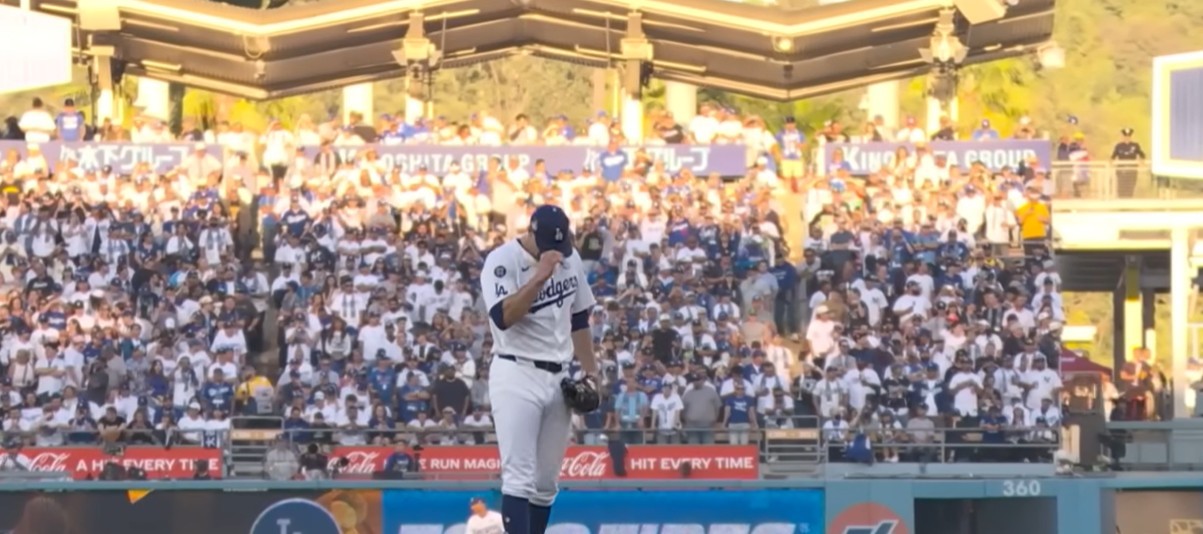
The Dodgers deal is the flagship, and it is the one with the most concrete inventory. According to the Dodgers' own release, published on MLB.com, Kalshi becomes the team's Official and Exclusive Prediction Market Partner. The package includes Kalshi branded LED signage at Dodger Stadium, naming rights to the Gold Glove Bar, Dodger specific offers in the Kalshi app and exclusive on site activations in Centerfield Plaza during the season.
The new name is a small piece of clever branding. The bar becomes the Kalshi 435 Club, and the number refers to the distance a home run must travel to reach the club's entrance. Covers describes the venue as an indoor sports bar directly underneath the Left Field Pavilion with a view of the bullpen. It is exactly the kind of asset that turns a logo into a place: fans meet there, talk there and take photos there, and the brand becomes part of the language of the ballpark rather than a board that flashes past between innings.
Lorenzo Sciarrino, senior vice president of global partnerships at the Dodgers, put it this way: "The Dodgers are always looking for innovative ways to connect with our fans, and Kalshi represents an exciting new category." That phrase, a new category, is the commercial heart of the story. For a club, a new category is new money that does not cannibalise an existing partner. The Dodgers are the two time reigning World Series champions, and Sportcal pointed out that the five partner clubs together hold 30 World Series titles, including five of the last eight. Kalshi did not just buy baseball; it bought some of its most successful and most watched franchises.
It is worth noticing what Kalshi gets around the stadium, too. Covers cited national polling estimating that the five clubs have 60 to 65 million fans between them, and about 9 million combined followers on X. In the language of sports sponsorship, that is reach, frequency and emotional context in one package, which is what a challenger brand needs most when it is trying to become a household name.
To understand how this is possible, go back to 19 March 2026. On that day MLB named Polymarket its Official Prediction Market Exchange, with exclusive rights in that role, and signed a memorandum of understanding with the Commodity Futures Trading Commission, the federal regulator that oversees prediction markets. According to MLB's release, Polymarket and its brokers can use MLB marks and logos in their prediction market products, receive official league data through Sportradar, and get brand exposure across MLB's digital platforms and at league events. Front Office Sports reported that the league deal is worth up to 300 million dollars over four years, a figure that was not confirmed in MLB's release.
Exclusive, in sports sponsorship, almost always means exclusive within a defined set of rights. A league owns its own marks, its central data, its national events and its digital channels. Clubs own their stadium inventory, their local radio, their own social accounts and their hospitality spaces. Front Office Sports reported that under the Polymarket deal, teams could still make their own agreements, and that MLB has since authorised other platforms, including Kalshi and Novig, under its integrity framework. Insider Sport noted that MLB described the exclusivity as commercial, not a regulatory condition.
There is a revealing detail in the way Kalshi presents its markets. CasinoBeats reported that Kalshi does not show the teams' full names on its platform and refers to them only by city. That is the league versus team split in practice: the official marks and logos for prediction market products sit with Polymarket at league level, while Kalshi can now be visible inside five ballparks and on five clubs' channels. Kalshi buys presence and emotion at the local level; Polymarket holds the badge and the data at the centre.
The team route is spreading quickly. The New York Mets were the first MLB club to sign with a prediction market when they agreed an exclusive, multi year deal with Novig in late July, and Polymarket then added a separate club deal with the New York Yankees in early August, which TRIX20 has covered on its own. With Kalshi's five, Front Office Sports counted seven clubs with prediction market agreements, about a quarter of the league. And the story may not stop at club level: Fortune, citing a person familiar with Kalshi's operations, and Reuters both reported that Kalshi is still in talks with MLB about a league level partnership of its own.
Kalshi describes itself as a federally regulated financial exchange where users trade on the outcome of real world events. On the surface the product looks familiar to anyone who knows Sports Betting. Fans can trade on team outcomes, including games, player performances and future results, as Covers explained. iGaming Business even published the Kalshi prices on announcement day, such as the Dodgers at 60 percent to beat the Braves and the Dodgers at 34 percent to win the World Series, the kind of numbers any sportsbook customer would recognise.
The legal structure, however, is different. A sportsbook is licensed state by state and sets odds against its customers. A prediction market lists event contracts that users trade with each other on an exchange overseen by the CFTC. That distinction is why prediction markets can reach fans in states where traditional Online Gambling on sport is not allowed, and it is why the whole category has grown so fast. Kalshi said baseball related contracts traded on its platform in 2026 so far total nearly 13 billion, a 36 fold increase on the roughly 355 million traded in the same period of 2025, according to Fortune. Covers reported that nearly 60 million dollars had been traded in Kalshi's World Series futures market alone. Sportcal described the growth as 36 percent year on year, but Fortune, Covers, Front Office Sports, DeFi Rate and iGaming Business all reported it as roughly 36 times, which matches the contract figures Fortune published.
For sportsbooks and Casino operators, this is the uncomfortable part. A product that looks and feels like a bet is now buying premium stadium inventory in markets where many of them cannot operate at all. DeFi Rate noted that four of Kalshi's five new partners are in states without legal sports betting: the three California clubs and the Braves in Georgia. In those markets, no licensed sportsbook can serve local fans, which leaves the betting style category in those ballparks wide open for a prediction market.
The commercial momentum has not settled the legal question, and the Red Sox deal shows it most clearly. Massachusetts Attorney General Andrea Joy Campbell sued Kalshi in September 2025, arguing that it needs a sports betting licence to offer sports markets in the state. According to DeFi Rate, a state judge granted a preliminary injunction in January, an appeals court stayed it pending appeal, and the state's highest court heard arguments in May without having ruled. iGaming Business reported that Kalshi's sports markets are not offered in Massachusetts while that ruling is awaited, and Covers described the injunction as paused during the appeal. Either way, the Red Sox have signed an exclusive partner whose core sports product is contested in the club's home state. CasinoBeats reported that the club did not respond when asked about that.
California is a different case. The state has taken no legal action against Kalshi, according to CasinoBeats, although Attorney General Rob Bonta joined a 37 state amicus brief in June supporting Ohio regulators against the company, as DeFi Rate reported. DeFi Rate also pointed out that the Dodgers' long standing casino partner, Yaamava' Resort and Casino at San Manuel, is owned by a tribal nation that has filed briefs opposing Kalshi in other states. A single stadium can therefore host two partners on opposite sides of the same legal argument.
New York adds one more twist. CasinoBeats noted that the state has declared sports prediction markets to be illegal sports betting, yet both of its MLB clubs have signed prediction market deals. And critics are loud. Senator Richard Blumenthal told Front Office Sports: "It is astonishing and appalling that Major League Baseball would, in effect, be complicit in this." Front Office Sports also noted that sports event contracts face numerous lawsuits, with several states arguing they should be regulated like traditional sports betting.
MLB's answer so far has been integrity rather than prohibition. Its March framework with Polymarket restricts markets that pose integrity risks, such as individual pitches, manager decisions and umpire performance, and the league said it would build comparable integrity relationships with other exchanges. Under the CFTC agreement, the league and the regulator share information and meet regularly. "Protecting the integrity of the game on the field is our top priority," Commissioner Robert D. Manfred Jr. said at the time. For sponsors and operators, that framework matters: it is the condition that lets clubs say yes to the money.
Kalshi's move fits a wider pattern. Before the MLB deals, Covers listed its sports partnerships with the NHL, the Chicago Blackhawks, LALIGA North America and the Argentine Football Association. Fortune noted that prediction markets have partnered with US leagues, individual teams and FIFA, with ADI PredictStreet signed as the first official prediction market partner of the 2026 FIFA World Cup, and that the NHL, MLS and UFC have struck similar arrangements. CasinoBeats added that Kalshi already has media deals with CNN, CNBC and FOX, and reported that it was close to an agreement with The Athletic.
Baseball is a natural fit for the product. A long season with a game almost every day gives an exchange constant liquidity, and the sport is built on statistics, probabilities and long range forecasts, from player awards to the World Series. The timing matters as well. Sportcal noted that four of the five partner clubs held a playoff berth with about a month of the regular season left. Signing in late August means Kalshi's brand sits in front of fans during the pennant race and potentially the postseason, when attention peaks.
There is also a competitive logic. Polymarket holds the league badge, so Kalshi has chosen depth over the crown: five clubs, several of them champions, in some of America's largest media markets. It is a classic challenger strategy in iGaming consulting terms. When the top tier asset is taken, you buy the assets closest to the fan, and you buy enough of them to make your presence feel national.
The first lesson is that exclusivity is only as strong as its definition. Polymarket is MLB's exclusive prediction market partner, and yet five clubs have signed its rival within six months. Any brand paying for exclusivity, whether as an operator, a bank, an airline or a telecom company, should know precisely which marks, data, channels and venues the exclusivity covers, and which ones a competitor can still buy from a club, a venue, a broadcaster or an athlete. The Kalshi correction of 26 August is a reminder that even the parties themselves can get this wrong in public.
The second lesson is that local assets can outperform national ones for brand building. A league badge brings credibility. A named bar inside the champions' stadium, radio reads during every broadcast and offers built around a single team bring daily contact with the most passionate fans. For many brands, the best route to brand awareness is a combination: one central agreement for legitimacy, and a few carefully chosen club or venue deals for intensity.
The third lesson concerns regulation. Kalshi is building fame in states where its legal status is contested, and that is a calculated risk. A licensed iGaming or Casino operator cannot take the same risk, and should not try. Every activation must match the licence in the market where it runs. In the UAE, the General Commercial Gaming Regulatory Authority, established in September 2023, has licensed Play971 as the country's first online gambling brand, according to Yogonet, and has said that sports betting may only be offered by operators it licenses. Any brand exploring sports sponsorship opportunities in Dubai or Abu Dhabi around gaming should start from that rulebook, not from a template imported from the United States.
The fourth lesson is about category creation. Clubs love a new category because it adds revenue without displacing an incumbent. In the Gulf, categories that are still empty in many club and event portfolios, from regulated gaming to fintech and trading platforms, may be the most valuable doors a brand can open. Deals of this kind need careful structuring: clear category definitions, opt out terms tied to regulatory change, integrity commitments and a plan for content that turns the partnership into stories fans actually want to watch, which is where strong media marketing makes the difference.
Finally, the Kalshi sweep shows that the boundary between sports betting, prediction markets and wider Online Gambling is now one of the most important strategic questions in sport. Leagues, clubs and brands will need iGaming Consulting expertise as much as sponsorship sales skills to navigate it. The commercial appetite is clearly there. The legal ground under it is still moving.
Three questions will shape how this story develops. The first is whether Kalshi turns its reported talks with MLB into a league level deal, and what that would mean for Polymarket's exclusivity. The second is the outcome of the Massachusetts case, which will test whether a club can keep promoting a partner whose sports markets are blocked at home. The third is whether more of the remaining clubs follow. Front Office Sports reported that the Guardians, Nationals, Phillies and Rockies said they had no prediction market agreements, but with seven clubs signed in barely a month, the category is clearly on every partnership team's agenda.
For rights holders and brands in the UAE, the message is not to copy the American model but to understand it. The way MLB separated league rights from team rights, the way Kalshi turned a stadium bar into a brand landmark, and the way regulation follows behind the money all offer a useful playbook for anyone planning sponsorship in a region where sport and gaming are both growing fast. Good iGaming Consulting starts with exactly these questions: who owns which rights, what the licence allows, and how the partnership earns the trust of fans.
Sources: MLB.com, Fortune, Sportcal, Covers, Front Office Sports, Reuters, iGaming Business, DeFi Rate, CasinoBeats, Insider Sport, Los Angeles Magazine, Yogonet