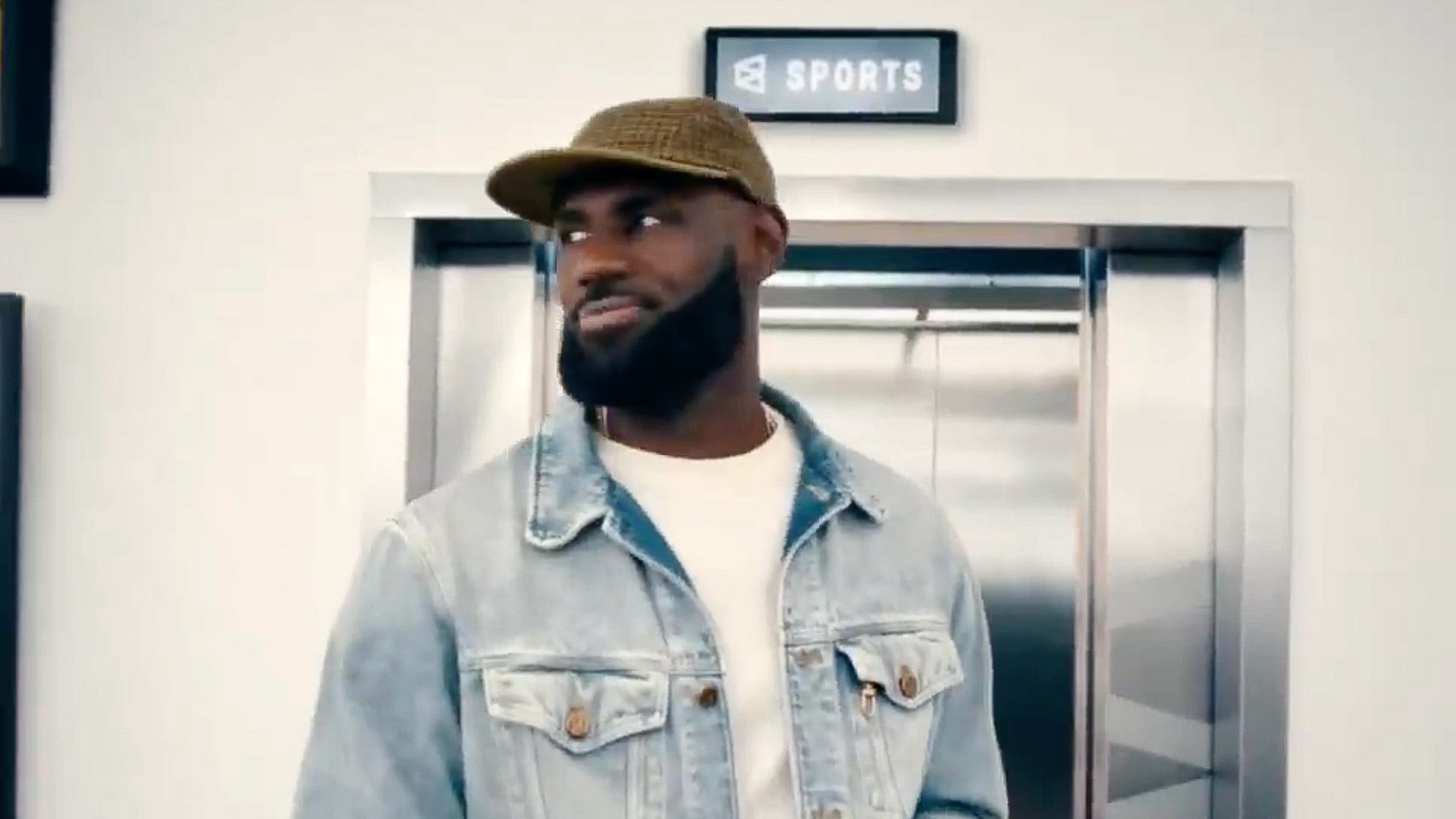
LeBron James does not usually need a press release. On Saturday 5 September 2026 he posted a 14 second video on X in which he steps into an elevator, ignores the buttons for politics, crypto, economy, culture, weather, esports and technology, and gets out on the sports floor of a building that turns out to be the headquarters of Polymarket. The caption read "Welcome to Polymarket HQ. Coming soon." and the post was tagged as a partnership with the prediction market. According to Front Office Sports, the clip passed nearly 10 million views within seven hours.
Yogonet reported that James is set to become the first NBA athlete to sign an individual partnership with Polymarket, which described the agreement as an exclusive partnership. A Polymarket spokesman told The Athletic that the company looks forward to "tapping into James' love for the sport", and the sport in question is not basketball. Front Office Sports reported that the deal will focus on American football, just as his previous endorsement with DraftKings did. That DraftKings agreement, first signed in 2024, expired earlier in the summer.
Within days the teaser became a full campaign. Polymarket launched "Polymarket HQ" on Tuesday 8 September with LeBron James, Derek Jeter and Eli Manning as signed promotional partners, and Front Office Sports later reported, citing sources, that the James deal is worth about $15 million a year. For anyone working in iGaming, sports betting or talent representation, this is one of the most important ambassador signings of the year, and it raises questions that reach well beyond one player and one platform.
The details that have emerged so far describe an endorsement, not an ownership stake. Front Office Sports reported that James is an endorser rather than an investor, and one source described the arrangement as an "ongoing engagement" with multiple deliverables, such as social media posts and other content. The length of the deal has not been disclosed. Polymarket declined to comment on the figures, and a representative for James did not immediately respond to the outlet.
The number itself is striking when set against his day job. Front Office Sports noted that James signed a two year, $8 million contract with the Philadelphia 76ers in July, and is expected to earn a little under $4 million in the 2026/27 season. The reported Polymarket fee is therefore more than three times his expected playing salary for the year. Marketing Dive pointed out that the partnership arrives ahead of what will be his record 24th NBA season.
That comparison says a lot about where the value sits for an athlete of his stature. At this stage of his career, James is a media property as much as a basketball player. Casino.org put his social media following at more than 231 million people, and the prediction market industry already knew how much attention he commands. Covers reported that when James became a free agent earlier in 2026, contracts on his next team generated more than $270 million in prediction market trading volume, including more than $225 million on Kalshi and more than $40 million on Polymarket.
Polymarket, for its part, is spending to match its ambitions. Front Office Sports reported that the company is backed by the parent company of the New York Stock Exchange and by 1789 Capital, the investment firm of Donald Trump Jr., which recently added $1 billion to the business. iGaming Business reported that Polymarket was seeking a $21 billion valuation in a round led by 1789 Capital, disclosed in late August. Northeast Times described Polymarket as the largest prediction market in the world by volume, but one that still trails in the United States, which is precisely the gap a campaign led by James is meant to close.
The campaign built on the elevator teaser. Casino.org and Northeast Times both described Polymarket HQ as a fictional office building in which each floor represents a trading category on the platform. The first advertising placed James on the sports floor, and the three signed partners, James, Jeter and Manning, hold 11 championship titles between them. The wider cast included Spike Lee, Alexandra Daddario, John Leguizamo, Craig Robinson, Rajon Rondo, Reggie Bush and Sue Bird, and Marketing Dive added Richard Sherman, Emily Ratajkowski and Bob Stoops to the list of talent used across the campaign.
Front Office Sports reported that Jeter and Manning are on "smaller" endorsement deals than James, and that some of the other celebrities were paid for the one commercial only. That structure is worth noting. It shows a brand building a tiered roster of faces, with one long term ambassador at the top, a couple of recurring partners beneath him and a rotating cast of cameo talent around them.
According to Marketing Dive, the creative work came from Stagwell's Today on the Moon and runs across TV, digital, out of home and social media in the United States. Tom Suharto, chief strategy officer at the agency, said: "It really was about building this expandable world and diving into what would happen in a fictional Polymarket office."
The campaign also had a product job to do. Casino.org reported that it launched alongside "Squads", private groups inside the Polymarket app where friends can chat about markets, share positions and trade together. Travis VanderZanden, Polymarket's chief growth officer, said: "With Squads, we're bringing the conversation and trading together so friends can follow the events they care about." He added that "People are constantly debating what's going to happen next with their friends." That is a smart piece of content marketing: the celebrities do not just endorse the brand, they act out the exact social behaviour the feature is designed to capture.
The timing was deliberate. The full campaign landed on Tuesday 8 September, less than 48 hours before the NFL regular season opener on Wednesday. iGaming Business reported that on that Tuesday Polymarket ranked first in App Store downloads among free finance apps, ahead of Kalshi, Capital One Mobile, PayPal and Venmo. By Wednesday afternoon, Front Office Sports counted 15.6 million views on the James post of the ad.
Reach is not the same as approval, though. Front Office Sports quoted Brett Dashevsky, co founder of the social media analysis firm Siftsy, who said the posts from James, Jeter and Manning drew mostly negative responses, including "sellout" comments. iGaming Business reported criticism from Craig Carton, a WFAN sports talk host and recovering compulsive gambler, who asked: "At what point does someone come along where you say no to the offer?"
James is the biggest name so far, but he is part of a pattern. Yogonet listed the recent run of athlete deals: Bryson DeChambeau signed with Kalshi in mid January as its first athlete endorser, Giannis Antetokounmpo announced a Kalshi deal in February and became the first NBA player to invest directly in the company, and Lionel Messi and the Argentina national team partnered with Kalshi in June. Maria Sharapova has promoted Polymarket by posting a video of herself trading during a live tennis match.
The league side of the market has moved just as quickly. Covers reported that the NHL signed a multi year deal with both Kalshi and Polymarket in October 2025, the first major league to do so. Front Office Sports reported that MLB's exclusive Polymarket deal was reportedly worth $300 million over four years, and that the NBA was widely expected to have prediction market partners in place before the 2026/27 season. The NFL, by contrast, has remained a holdout. TRIX20 has covered Polymarket's tie up with the New York Yankees and Kalshi's run of team deals separately, and the James agreement is the athlete level version of the same push.
There are clear commercial reasons for the shift towards individual ambassadors. A league deal buys logos, data and in game inventory. An athlete brings a direct audience, an existing personal brand and the ability to make a product feel cultural rather than financial. For a platform that wants to be seen as a social trading experience rather than a bookmaker, a star who can joke with Spike Lee in a fictional office is worth more than another banner on a perimeter board.
There is also a regulatory angle that makes athletes attractive. iGaming Business noted that prediction markets allow customers aged 18 to 21 to trade sports event contracts, while regulated sportsbooks in the US do not. A celebrity campaign that reaches young sports fans therefore lands on an audience a traditional online gambling operator in most US states could not legally serve.
The obvious question is whether an active NBA player can front a platform that lists markets on NBA games. According to a person familiar with the matter who spoke to Front Office Sports, the NBA has no specific policy barring players from endorsing prediction markets. Players may not, however, promote specific NBA related event contracts, which the person said matches how the league treats traditional sports betting.
The collective bargaining agreement sets the broader frame. Front Office Sports reported that Article VI(c) of the NBA's CBA allows players to partner with "Gaming Companies", subject to certain provisions, and that permitted deals must be for general brand promotion or endorsement, or for the promotion of betting on non NBA sports. That explains the football focus. By attaching James to the NFL season rather than to his own league, Polymarket and his team have structured the deal around the clearest permitted use.
It is worth remembering why the league is careful. Front Office Sports recalled that the NBA gave Jontay Porter a lifetime ban in 2024 for betting on his own games, and that Terry Rozier and Malik Beasley face federal cases related to betting. In a July comment letter to the CFTC, the NBA said the regulator's proposed rules "fall well short" of the basic sports integrity protections it wanted. Any league that is about to sign its own prediction market partners has every reason to watch how its biggest star is used in advertising.
The comparison with the regulated sports betting industry is instructive. Covers reported that the American Gaming Association updated its Responsible Marketing Code in March 2023 so that anyone featured in sportsbook advertising must be 21 or older, sportsbook name, image and likeness deals with college athletes are prohibited, and the phrase "risk free" is no longer used. In the UK, iGaming Business reported that the Committee of Advertising Practice brought in a rule from October 2022 that gambling ads must not be of "strong appeal" to under 18s, which in practice removed top flight footballers and sportspeople well known to children from betting advertising. A deal like James's would face serious obstacles in either framework, and that contrast is exactly what critics of prediction markets point to.
All of this is happening while the legal status of sports event contracts remains unresolved. Northeast Times reported that on 3 September New Jersey petitioned the US Supreme Court on whether state sports betting laws can apply to prediction markets. Covers noted that the Ninth Circuit had affirmed a decision that allows Nevada to block a prediction market operator from working in the state, and that if the Supreme Court takes the case a ruling would likely take more than a year.
Front Office Sports added that prediction markets face lawsuits from state attorneys general, including New Jersey and Nevada, and from several Native American tribes. The federal versus state question at the heart of these cases is expected to reach the Supreme Court. For a brand ambassador, that means signing with a company whose core sports product could be restricted in some states, and whose advertising could come under new scrutiny at any time.
That uncertainty is a risk for both sides. A platform that loses access to key markets may want to renegotiate or exit. An athlete whose image is tied to a product that regulators or courts later treat as unlicensed online gambling could see reputational damage that outlasts the fee. Good contracts anticipate both outcomes with clear termination rights, morality and regulatory change clauses, and careful wording on what the athlete is and is not endorsing.
For operators, the first lesson is that ambassador value now depends on fit with the product, not just fame. Polymarket did not simply put James in front of a logo. It wrote him into a world, gave him a role and connected the creative to a feature people can use. The brands that get the most from a sports betting or casino ambassador will be those that build a story the athlete can live inside for several seasons, rather than buying a single spot.
The second lesson is structure. The Polymarket roster, as reported by Front Office Sports, uses one headline ambassador, a few smaller recurring deals and one off cameo fees. That tiered model spreads risk and lets a brand test which faces actually move sign ups. It also means compliance has to be designed into every tier, since the rules on age, appeal to minors and league restrictions apply to the cameo as much as to the star.
The third lesson is that backlash is part of the cost, and it lands on the athlete's personal branding as much as on the operator. The negative replies counted by Siftsy and the criticism from responsible gambling voices did not stop the campaign from topping the App Store, but they show that an athlete's audience may not share the brand's enthusiasm. Operators should plan community management, responsible gambling messaging and a clear answer to the "sellout" charge before the first post goes live.
For athletes and their agents, the lessons mirror those points. Personal branding is the asset being sold, so the question is not only how much a deal pays but what it does to the brand over five or ten years. League rules must be checked line by line. In James's case the CBA allowed gaming partnerships for general promotion or non NBA sports, and the football focus fits that wording. A player in a different league, or in a market with stricter advertising codes, could be in breach by signing the same deal.
Agents should also look carefully at the counterparty. A prediction market, a licensed sportsbook and an online casino operator carry very different regulatory profiles, and an ambassador should understand which one they are endorsing in each country where their content will be seen. Strong talent representation in this space now means combining commercial negotiation with a working knowledge of gambling regulation, which is where iGaming consulting and athlete management increasingly overlap.
The UAE is at a much earlier stage, but the same questions are arriving. AsGam reported in June that Play971, described as the UAE's first and only licensed sports betting and gaming platform, holds its licence from the General Commercial Gaming Regulatory Authority and named former Australian cricketer Brett Lee as its first official brand ambassador. Lee, who has made the UAE his home since retiring, will appear in fan engagement initiatives and activations, according to the report.
That choice shows how a regulated operator in a new market can use an ambassador differently from a US prediction market. Play971 picked a sport with deep roots among the UAE's large South Asian community and an athlete who lives in the country, rather than chasing pure global reach. For brands looking at sports betting sponsorship opportunities in Dubai and across the Emirates, the lesson from both deals is that the ambassador has to fit the audience, the product and the regulator at the same time.
We expect more athlete ambassador deals in iGaming across the Gulf as the licensed market grows, and they will need careful structuring from day one. An iGaming consulting partner can help operators decide which talent is permitted, which sports and markets an ambassador can promote, and how to build campaigns that respect local rules on online gambling advertising.
The LeBron James and Polymarket partnership marks the moment prediction markets moved from league logos to personal endorsements at the very top of sport. It pays one of the most famous athletes in the world more than his team does, it was launched with a celebrity heavy campaign timed to the NFL kickoff, and it has been carefully shaped to sit within the NBA's rules on gaming partnerships.
For operators in iGaming and for the athletes they want to sign, the takeaway is simple enough, and it is the first question we ask in any iGaming consulting brief. Ambassador deals work when the story, the product and the rules line up. As a marketing agency in Dubai working across sport, talent and iGaming, TRIX20 sees that combination as the real test of every partnership of this kind, far more than the size of the fee.
Sources: Front Office Sports, Yogonet, Covers, Casino.org, Marketing Dive, iGaming Business, Northeast Times, AsGam