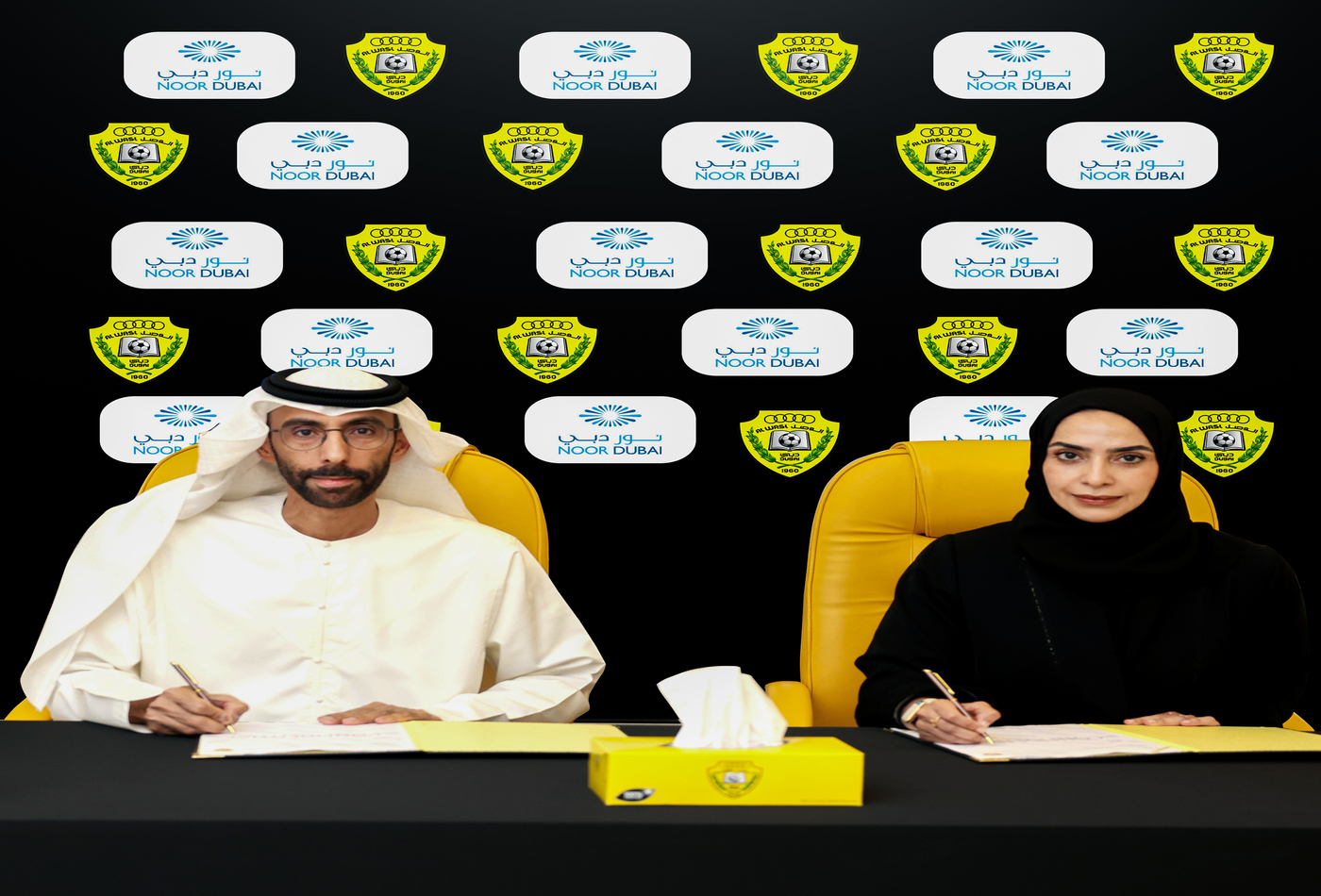
Al Wasl will carry a new name across its shoulders in Asia this season, and it is not a bank, a developer or a telecoms company. On 11 October 2026 the Dubai club announced that Noor Dubai Foundation, the charity that works to prevent and treat blindness, has become the charity sponsor of its first team for the AFC Champions League Elite. The foundation's logo will appear on the back of the shirt in the club's matches in the competition, and only there.
The deal was signed by Al Wasl Football Company and announced on the club's own website, and the Emirates News Agency WAM distributed the story the same evening. Al Bayan and Al Ittihad published the WAM report, and Al Khaleej also covered the deal. It arrived one day before Al Wasl hosted Al Ahli Saudi, the defending Asian champions, at Zabeel Stadium in the second round of the league stage.
On the surface it is a modest announcement. Look closer and it is a neat piece of sports sponsorship design: a clearly defined slice of shirt inventory, tied to one competition, handed to a cause that shares the city's name. For brands and rights holders in the Gulf, it is a template worth studying, because it shows how a club can create value from a short, sharply bounded window rather than waiting for a full season deal to come along.
According to Al Wasl Club, the agreement makes Noor Dubai Foundation the sponsor of the first team throughout the club's AFC Champions League Elite campaign, with the foundation's logo placed on the back of the team shirt. Al Bayan, which published the WAM report, describes the same terms: the logo goes on the back of the first team shirt in the club's matches in the tournament. Neither the club nor the press reports mention a fee, a duration beyond the Asian campaign, or any activation plan, so the commercial terms remain private.
The club framed the deal as a meeting of sport and humanitarian work. In its statement, Al Wasl said the partnership combines its sporting profile with a humanitarian purpose and uses football's broad audience to encourage generosity and raise awareness of initiatives that help individuals and communities.
Fardan Al Fardan, Chairman of Al Wasl Investment Company, spoke in those terms. "We are proud to partner with Noor Dubai Foundation," he said, adding that the club sees the shirt as carrying the name of an organisation that represents Dubai's humanitarian mission. "We believe that the role of a football club extends to serving the community," he continued, describing football, with its broad public following, as "a powerful platform for spreading the values of generosity". He also connected the deal directly to the club's continental profile, noting that Al Wasl's presence in Asia now travels with a foundation that carries Dubai's name. "We look forward to this partnership carrying the Foundation's message to a wider audience," he said.
For the foundation, Dr Manal Taryam, Chief Executive Officer and Board of Trustees member of Noor Dubai Foundation, stressed the value of regional and international support. She said partnerships of this kind strengthen the foundation's standing and its ability to reach the communities in greatest need. "Our impact comes from providing treatment directly," she explained, and also from helping partner countries improve access to care. "We do this by developing programmes, rehabilitating and equipping service centres," she said, as well as by training medical, health and education staff.
The most interesting part of this deal for anyone working in sports marketing is not the logo itself but where and when it appears. Shirt sponsorships in Gulf football are typically sold as season packages. A partner takes the front, the sleeve, the back or the shoulder and keeps it in every match, domestic and continental, for one or more years. That is the model behind most of the deals Al Wasl announced in the summer.
Here, the club has treated its Asian campaign as a separate product. The back of the shirt in AFC Champions League Elite matches is a defined asset with its own audience: continental broadcast coverage, away trips to some of the biggest clubs in Saudi Arabia and Iran, and home nights at Zabeel Stadium against opponents with large regional followings. By isolating that inventory, the club can attach a partner to it without disturbing the rights it has already sold for the rest of the season.
In other sports, tours, cup runs and one off fixtures often carry their own partners, much like event sponsorship. In Gulf football the approach is less visible, which is why the Noor Dubai arrangement stands out. It shows that a club can split its calendar into distinct properties, each with its own story, and offer them to partners who might never commit to a full season.
For brands, the appeal is easy to see. A short, defined term limits the financial commitment and makes the objective clear. A company launching in Saudi Arabia, for example, could find the Asian fixtures of a UAE club more relevant than the domestic league, because several of the away games take place in that market. A short campaign also makes measurement simpler. There is a fixed number of matches, a known broadcast footprint and a clear start and end point against which to judge brand awareness and sentiment.
For clubs, competition specific inventory creates a product that did not exist before. It can be offered to a charity, as Al Wasl has done, or to a commercial partner whose interest is regional rather than local. It can also serve as a trial: a partner who enjoys an Asian campaign may come back for a season deal later. None of this is stated by Al Wasl or Noor Dubai, but it is the logic that makes this model attractive to rights holders across the region.
Giving shirt space to a charity is an established practice in world football. It allows a club to show its values on the most visible piece of inventory it owns, and it gives the cause a level of exposure it could rarely buy on its own. Al Wasl's own words point in that direction. The club spoke about using its fan base and its sporting presence to support humanitarian work and promote giving and social solidarity, according to the WAM report published by Al Ittihad.
There is a strong local fit as well. Noor Dubai Foundation was established by His Highness Sheikh Mohammed bin Rashid Al Maktoum, Vice President and Prime Minister of the UAE and Ruler of Dubai, and it sits within the Mohammed bin Rashid Al Maktoum Global Initiatives. Al Wasl is one of Dubai's oldest and most supported clubs. A Dubai club carrying a Dubai charity into Asian competition sends a coherent message about the city, its institutions and its humanitarian agenda. Dr Taryam herself linked the foundation's work to Sheikh Mohammed's vision of helping everyone in need, according to Al Wasl Club.
Cause partnerships also change the tone around a club. Coverage tends to focus on the purpose rather than the price, which builds brand awareness of a different, warmer kind, and commercial partners already on the shirt gain from sitting next to a respected humanitarian name.
For the charity, the benefits go beyond visibility. A shirt placement gives a foundation a natural reason to tell its story through content marketing: match day features, player visits, short films about patients and programmes, and social posts timed around fixtures. Whether Noor Dubai and Al Wasl plan activities of this kind has not been announced, but the platform is there, and the most successful cause sponsorships in football are usually the ones that go beyond the logo.
Noor Dubai began as an international charitable initiative launched on 3 September 2008 by Sheikh Mohammed bin Rashid Al Maktoum, according to the foundation's own website. A decree under Law 18 of 2010 then established it as a non governmental, non profit foundation. Its mission is to provide therapeutic, preventive and educational programmes that treat and prevent blindness and visual impairment in developing countries, regionally and internationally. Its vision is a world free from curable and avoidable forms of blindness, where people in low income regions have access to eye care.
The foundation states that in its first year it reached more than 5.8 million people. It lists affiliations with the International Agency for the Prevention of Blindness, the Neglected Tropical Disease NGO Network and the International Coalition for Trachoma Control, as well as its membership of the Mohammed bin Rashid Al Maktoum Global Initiatives. In the WAM report on the Al Wasl deal, Dr Taryam said the foundation has now helped more than 33 million people worldwide.
A report published by the Government of Dubai Media Office in March 2025 gives a closer look at the scale of the work. In 2024 alone, Noor Dubai delivered healthcare and treatment services to 3,859,131 people in Asia and Africa. Its mobile treatment camps, described in that report as one of the world's largest field based humanitarian initiatives against visual impairment, have carried out 828,351 examinations, 37,320 surgeries and distributed 85,365 pairs of prescription glasses across 19 countries since 2010. In 2024 the camps included 18,279 medical examinations in the Philippines and 2,596 sight saving surgeries in Nigeria.
The foundation also works at home. Its Mobile Eye Clinic in the UAE provided free eye care to 4,658 patients in 2024 and has served more than 43,727 people since its launch in 2014, according to the Dubai Media Office. Abroad, a school eye health programme in Katsina State, Nigeria, screened 281,103 students and 2,196 teachers in 2024, while the foundation's work against trachoma contributed to eliminating the disease in 29 per cent of affected areas in Amhara, Ethiopia. Awadh Seghayer Al Ketbi, Chairman of the Board of Trustees, said in that report that "Noor Dubai has successfully established a global model" through its partnerships with international blindness prevention organisations.
Those numbers matter in a sponsorship context. A cause partner with measurable, credible results gives a club a story it can tell with confidence. When Al Wasl players walk out in Riyadh, Tehran or Dubai with the Noor Dubai logo on their backs, the message behind it is concrete: eye examinations, sight saving surgeries and prescription glasses for schoolchildren and patients who would otherwise go without.
The Noor Dubai agreement adds to a commercial programme that was already unusually full. In July, Al Wasl Investment Company announced 14 sponsorship agreements and strategic partnerships for the 2026 to 2027 season, which Gulf Today described as the largest sponsorship portfolio the club has had in a single season. We covered that announcement in detail in our earlier article on Al Wasl's record 14 partner portfolio.
That July line up included Huna, renewed as official sponsor of the club and first team for a third consecutive season; Dubai Real Estate Center, renewed as Platinum Sponsor of the first team for a fifth season; Dubai Investments as a new gold sponsor with its logo on the jersey; Commercial Bank of Dubai on the jersey shoulders; and Puma, renewed as kit and equipment supplier. Tadawi Healthcare Group, Al Wathba National Insurance Company, Masafi, Namat Development, Car Fare, Dream Dubai, Emicool, Parkonic and Dubai Refreshments Company through its Gatorade brand completed the list, according to Gulf Today.
At that ceremony, Al Fardan said the club's relationships "are built on trust and mutual success, rather than short-term contracts", and described sponsorship "as a strategic partnership that goes beyond marketing rights". The Noor Dubai deal is short by design, yet it fits that philosophy. It is not a quick sale of space but a partnership built around a shared message, and it uses a piece of inventory that sits alongside, rather than in competition with, the long term partners the club announced in the summer.
It also shows a club thinking carefully about its sports branding. With so many partners already on board, adding another commercial logo for the Asian campaign could have looked crowded. A humanitarian partner on the back of the shirt, used only on the continental stage, lets Al Wasl present a distinct identity in Asia that is about Dubai as much as it is about the club.
The stage itself is a demanding one. Al Wasl is one of three ADNOC Pro League representatives in the 2026 to 2027 AFC Champions League Elite, alongside Al Ain and Shabab Al Ahli, according to the UAE Pro League. The competition opens with a league stage in which each club plays eight matches, four at home and four away, with the top eight teams from each region advancing to the round of 16.
The draw, reported by the UAE Pro League in August, handed Al Wasl a heavy schedule. At Zabeel Stadium the club hosts Al Ahli Saudi, Neftchi of Uzbekistan, Al Hilal and Al Ittihad. On the road it visits Esteghlal and Tractor in Iran, and Al Nassr and Al Qadsiah in Saudi Arabia. Matchweeks run from September through December 2026, then resume with the final two rounds in February 2027, with the round of 16 scheduled for March 2027.
The campaign started with a defeat. Al Wasl lost its opening match to Al Qadsiah and was still looking for its first points when it prepared to host Al Ahli Saudi on Monday 12 October at Zabeel Stadium, with kick off at 8pm UAE time, according to Al Khaleej. Al Ahli arrived as defending champions, having drawn 1 to 1 at home with Pakhtakor in their own opening game.
For a sponsor, that fixture list is the real value of the property. Seven of Al Wasl's eight league stage opponents are clubs from Saudi Arabia and Iran, two of the biggest football audiences in the region, and several are among the best known names in Asian football. Every one of those matches puts the Noor Dubai logo in front of supporters and broadcast viewers far beyond the UAE.
Al Wasl brings its own pedigree to that stage. Founded in 1960 and nicknamed The Emperor, the club plays at Zabeel Stadium and has won the UAE league eight times. Its most recent title came in the 2023 to 2024 season, when it also won the President's Cup to complete a domestic double, which is why its return to Asia attracts attention at home.
The first lesson is that sponsorship opportunities in Dubai are not limited to full season, front of shirt packages. Clubs are increasingly willing to break their rights into smaller and more specific pieces: a sleeve, a shoulder, a training kit, a single competition. Each of these can match a different brand objective and budget. The Noor Dubai deal is a reminder that a club's calendar is itself an asset, and that a continental campaign can be packaged and sold on its own.
The second lesson is about fit. Al Wasl did not simply look for the highest bidder for its Asian inventory. It chose a partner whose identity strengthens the club's own story on that stage. Brands looking at UAE football club sponsorship should think the same way. What does the competition, the audience and the opponent list say about where the brand wants to be seen? A brand targeting Saudi consumers, for instance, will find more value in a UAE club's Asian fixtures than in a domestic friendly.
The third lesson is that purpose and commercial value are not opposites. A charity sponsorship builds goodwill for the club and its existing partners, and it can make a whole sponsorship portfolio feel more credible. Commercial brands can borrow this thinking through cause linked activations, such as donating per goal, funding a programme or co branding a community initiative with a club's charitable partner. Sponsorships built around a real cause can generate more earned media and warmer fan sentiment than a logo placement alone, which is why cause led sports sponsorship deserves a place in any serious brand plan.
Finally, short deals need strong activation. A logo that appears in eight league stage matches has a limited window to make an impression, so the brands that benefit most will plan content, hospitality and digital storytelling around each fixture. That is where event sponsorship thinking and sports marketing thinking come together, and where the difference between a visible deal and a memorable one is decided.
Al Wasl and Noor Dubai have shown how much can be done with a single piece of shirt space and a clear purpose. For a club with a record partner roster, it is an elegant piece of sports marketing that adds meaning to its Asian campaign. For other rights holders in the UAE, it is a reminder that the most creative sponsorship products are often hiding in the inventory they already own.
Sources: Al Wasl Club, WAM, Al Bayan, Al Ittihad, Al Khaleej, Noor Dubai Foundation, Government of Dubai Media Office, Gulf Today, UAE Pro League