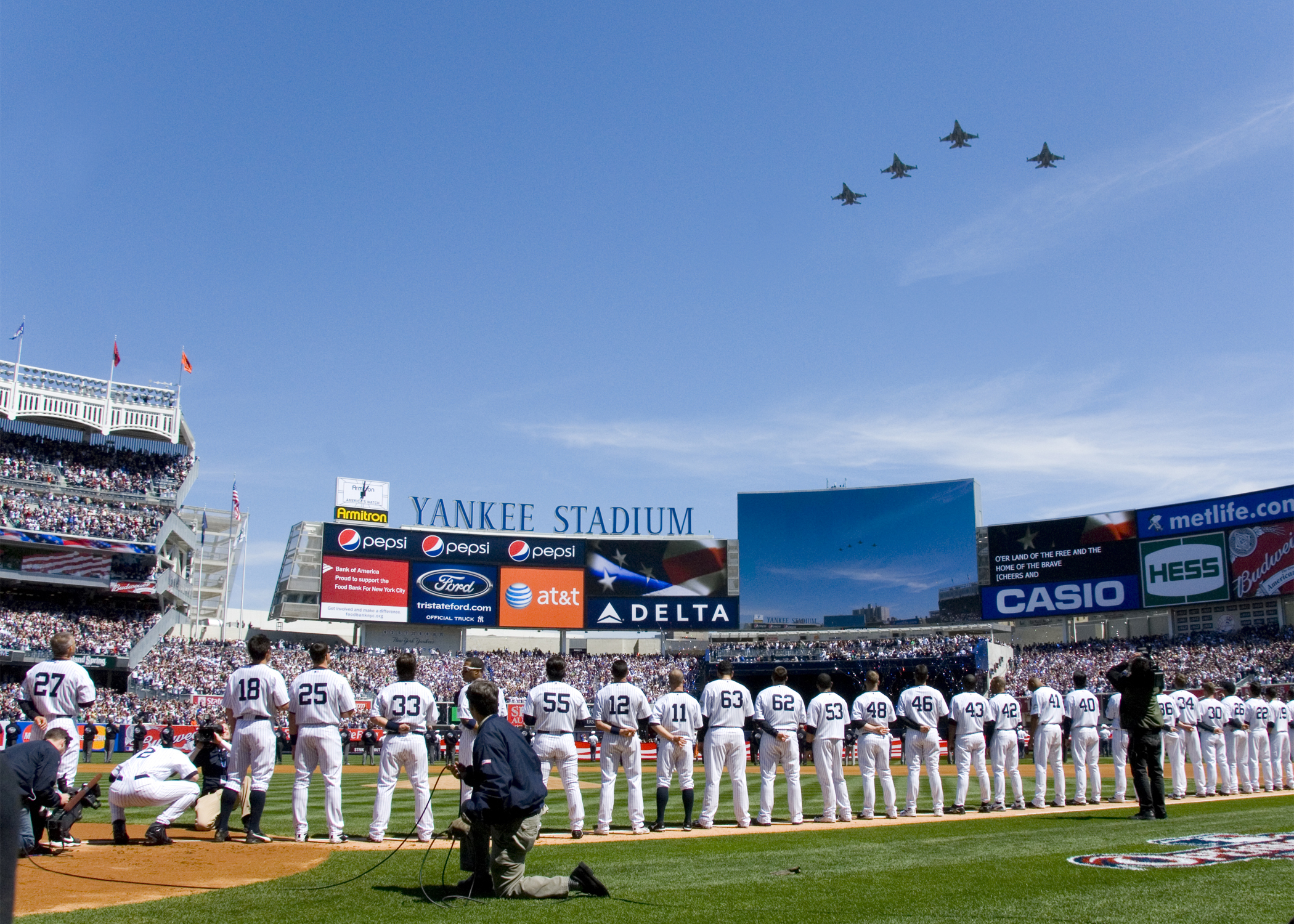
Baseball has always been a game of numbers, and on 6 August 2026 one of its most famous clubs put a company built entirely on numbers inside its stadium. The New York Yankees named Polymarket as an Official Prediction Market Partner for the rest of the 2026 Major League Baseball season, handing the platform some of the most watched advertising space in American sport: LED branding around Yankee Stadium and a rotating sign directly behind home plate during locally televised games.
Financial terms were not disclosed. What was disclosed tells its own story. According to Fox Business, the Yankees became the first MLB club to sign a deal of this kind, and only the second team across North America's four major leagues to partner with Polymarket, after the NHL's New York Rangers. The timing was striking too. New York State was already in court trying to stop prediction markets from offering sports contracts to its residents, and the Yankees signed anyway.
For anyone who works in Sports Betting, iGaming or brand partnerships, this is more than a baseball story. It shows how quickly prediction markets have moved from the fringes of finance into the commercial heart of sport, and how much legal uncertainty clubs are now willing to carry in exchange for a new category of sponsor.
The package, set out in the official announcement distributed through PR Newswire, is built around visibility and hospitality. Polymarket receives LED branding inside Yankee Stadium before and during games, plus rotating home plate signage during Yankees games broadcast locally on the YES Network and Prime Video. Sportcal noted that the broadcast integration covers certain local games rather than national broadcasts, which is an important detail for anyone valuing the deal on television exposure alone.
The hospitality side includes tickets in the Ford Field MVP Club and single game luxury suites. Then come the fan experiences, which are pitched squarely at families: an outfield catch for children, Kids Run the Bases, and the chance for a young fan to deliver the line up card. These are small moments, but they are carefully chosen. They put a prediction market brand next to the most wholesome rituals in baseball, which is exactly the kind of association a young and controversial category wants.
The inventory also had a clear calendar. Sportcal reported that 28 of the Yankees' 46 remaining fixtures at the time of signing were home games, all scheduled before the end of September, starting with a visit from the Atlanta Braves on 7 August. After 115 games the Yankees were 64 and 51, second in the American League East. With a stadium capacity of 46,537, that is a concentrated burst of in venue exposure over a few weeks, amplified by regional television.
Ari Borod, President of Sports Business Development at Polymarket, framed the deal in emotional terms. "We are proud to become a partner of one of the most iconic teams, not just in baseball, but in all of sports," he said, as quoted by InterGame. He added that "Yankees fans are among the most passionate in sports, and Yankee Stadium is a natural home for Polymarket." Fox Business also reported him describing Yankees fans as "among the most active on our platform", a revealing line, because it suggests the deal was driven by existing user data rather than prestige alone.
For the club, Michael Tusiani, the Yankees' Senior Vice President of Partnerships, said the team was "excited to begin a relationship with Polymarket" and pointed to the platform's status as Major League Baseball's prediction market partner. According to SBC Americas, he said the Yankees looked forward to "elevating Polymarket's brand awareness" among their fans.
The Yankees deal did not appear from nowhere. On 19 March 2026, Major League Baseball named Polymarket its Official Prediction Market Exchange. According to the league's own press release, Polymarket and its brokers received exclusive access to MLB marks and logos for prediction market products, along with Official League Data supplied by Sportradar, MLB's exclusive global distributor of data for prediction markets.
The same announcement included something the betting industry should study closely: an integrity framework. MLB and Polymarket agreed to restrict markets that pose an integrity risk, naming individual pitches, manager decisions and umpire performance as examples. Polymarket committed to adding those controls to its US rulebook. At the same time, Commissioner Robert D. Manfred Jr. signed a memorandum of understanding with Michael S. Selig, Chairman of the Commodity Futures Trading Commission, to share information confidentially on the integrity of baseball and related prediction markets. Manfred called the agreements "imperative steps in proactively managing the new and rapidly growing prediction market space."
That league level structure is what made a club level deal possible. Under the MLB arrangement, Polymarket was already allowed to use official marks and data. The Yankees partnership adds the local layer: the physical stadium, the regional broadcasts and the direct relationship with a fan base. This is a familiar pattern in sports sponsorship, where a league category deal opens the door and individual clubs then sell their own inventory within the same category.
Polymarket has been working this playbook across several sports and continents. The PR Newswire announcement noted that the Yankees agreement followed partnerships with the Bundesliga and Liga MX. Fox Business added that Polymarket is also the NHL's official prediction market partner. In just a few months, the platform has assembled a portfolio of league and club deals that would have been unthinkable for a crypto based forecasting site only a couple of years earlier.
What makes the deal remarkable is where it was signed. New York has some of the most active opposition to prediction markets anywhere in the United States, and its fight was well under way in August.
According to DeFi Rate and Bonus.com, a federal judge ruled in July that New York could enforce its gambling laws against Kalshi's sports event contracts while the case proceeded. Attorney General Letitia James had filed a civil enforcement action seeking to stop Kalshi operating in breach of state gambling law, claiming at least $36 billion in compensatory damages pending an accounting, along with restitution, disgorgement and penalties. When the CFTC and the Department of Justice sought emergency relief, arguing that the state was intruding on federal jurisdiction, a federal judge denied the request. Kalshi took the fight to the Second Circuit, with its opening brief due on 31 August. Separately, the New York State Gaming Commission subpoenaed Kalshi for documents covering its sports products and transactions involving users under 21.
The state had also sued Coinbase and Gemini in April over their event contracts, and Novig's Ludlow Exchange had filed its own federal lawsuit to stop New York applying gambling laws to its sports contracts. At the moment the Yankees deal was announced, DeFi Rate noted that New York's actions had not directly targeted Polymarket, although the state's position could affect any federally regulated sports event contract.
Meanwhile, New York's sports teams were signing prediction market partners at speed. The Rangers partnered with Polymarket in January. Kalshi became an official partner of Madison Square Garden and MSG Networks in May. The week before the Yankees announcement, the Mets named Novig their official prediction market partner in a multiyear deal. In other words, the state was fighting the category in court while its biggest franchises were selling it signage.
The legal pressure has only grown in the weeks after the announcement, and anyone weighing a similar partnership should know how the story developed.
In Italy, the risk became very concrete. SBC News reported that on 10 July the country's Customs and Monopolies Agency, ADM, had returned Polymarket to its list of sites not authorised to offer gambling to Italian consumers. Because that classed Polymarket as a gambling operator, its record €22 million shirt deal with Lazio clashed with the 2018 Dignity Decree, which bans direct and indirect gambling advertising and sponsorship. On 11 August, five days after the Yankees announcement, Lazio and Polymarket ended the agreement by mutual consent, with Polymarket paying the full amount due for the 2026/27 season.
Back in New York, the state turned its attention to Polymarket itself. On 24 September, according to SBC Americas and amNY, Attorney General Letitia James, alongside Governor Kathy Hochul, sued Polymarket's US business, QCX, in the Supreme Court of the State of New York. The state alleges that Polymarket runs an unlicensed gambling operation, allows users aged 18 to 20 to trade on sports when New York's minimum age for mobile sports betting is 21, and offered contracts on New York college teams such as Syracuse and St. John's, which licensed sportsbooks cannot take bets on. The state is seeking a permanent halt to operating and marketing in New York, restitution, penalties of three times the alleged gains and $100,000 for each offer or attempted offer of sports wagering.
Polymarket hit back the same day with its own lawsuit in Manhattan federal court, calling the state's move an "extraordinary assertion of state power squarely foreclosed by federal law," according to SBC Americas. Neal Kumar, Polymarket's Chief Legal Officer, told amNY the company employs more than 350 people in New York and added: "We believe in New York and we're staying here." SBC Americas also reported that the CFTC itself had sued New York in April 2026, which shows how far this has become a contest between federal and state authority.
InterGame, reporting on the Yankees deal, pointed to wider scrutiny as well: Polymarket had recently been sued in Kentucky, and in France the gambling regulator had ordered internet service providers to block it.
The legal argument comes down to a single question. Is a contract that pays out if the Mets beat the Braves a financial derivative or a sports bet? Prediction market operators say the former, and in the United States they fall under the CFTC. State regulators, and gambling regulators in Europe, increasingly say the latter.
For traditional Sports Betting operators, the commercial implications are significant. A licensed sportsbook in New York pays state gaming tax, follows a 21 and over age rule and accepts a long list of restrictions, including the ban on wagering on in state college teams. New York's complaint against Polymarket makes exactly this point, arguing that CFTC registered prediction markets do not contribute to the state's economy through gaming taxes. When a club sells a category partnership to a prediction market, it is selling to a competitor that, at least for now, sits outside that framework.
For the wider iGaming industry, prediction markets are both a threat and a signal. They compete for the same sports fan, the same marketing inventory and often the same media budgets. But they also show the appetite for new product formats: event contracts on elections, entertainment and culture, priced in a way that feels closer to trading than to a classic Online Gambling bet slip. Casino and sportsbook operators who watch this space carefully will find ideas on product design and fan engagement, even if they never list a single event contract.
For leagues and clubs, the Yankees deal shows that prediction markets have become a genuine sponsorship category, sitting alongside betting partners rather than replacing them. Clubs can sell to both, as long as category definitions in their contracts are watertight. That last point is not trivial. Partnership contracts now need clauses for regulatory change, termination rights and compensation if a sponsor is reclassified as a gambling operator, as Lazio discovered in Italy.
Three practical lessons stand out for brands and properties planning their next partnership.
First, short deals reduce exposure. The Yankees signed for the remainder of a single season. That gives both sides a clean exit point if the courts or regulators move against the category, and it lets the club test sponsor demand without locking in a long term commitment. Lazio's multi season deal, by contrast, ended with a negotiated settlement after one regulatory decision.
Second, integrity frameworks are becoming part of the price of entry. MLB's agreement with Polymarket, with restricted market types and an information sharing memorandum with the CFTC, is a template other leagues are likely to copy. Any betting or prediction brand entering sport should expect to show how it protects competitions, not just how much it can pay. This is increasingly where iGaming consulting work begins: mapping which markets a partner offers, which ones a league will tolerate, and how that is written into the contract.
Third, activation matters as much as signage. The Yankees package mixes high visibility LED and home plate boards with hospitality and family focused fan moments. That combination of broadcast exposure, live experience and content is classic media marketing, and it is how a new category earns legitimacy with fans who may not yet understand what the product is.
The UAE is building a regulated gaming market almost from scratch, and the American experience offers useful warnings. The General Commercial Gaming Regulatory Authority, GCGRA, was established in September 2023. According to Yogonet, Play971, operated by Coin Technology Projects LLC, part of Abu Dhabi based Momentum Group, launched in June 2026 ahead of the World Cup as the first and only online gambling brand the regulator has authorised, holding Internet Gaming and Sports Wagering licences. Play971 offers sports betting, including UAE football and horse racing, alongside online casino games, and is restricted to customers aged 21 and over. Yogonet reported that only GCGRA licensed operators may offer sports betting and that the regulator plans a strict approach to unlicensed offshore operators targeting UAE consumers.
That clarity is an advantage. In the United States, sponsors and clubs are working through a contest between federal and state regulators. In the UAE, there is a single regulator and a clear licensing route, so a brand that wants to attach itself to sport around betting or forecasting products will need to start with the question of whether it holds, or partners with, a licence. Unlicensed products, however they are labelled, are unlikely to find a welcome. For clubs, events and media owners in the Gulf, the Yankees case is a reminder to define betting and prediction categories precisely in contracts now, before demand from global operators arrives. Specialist iGaming consulting can help both sides understand where those lines sit.
There is also an opportunity. Sports sponsorship opportunities in Dubai and Abu Dhabi are growing quickly, and licensed gaming brands will look for the same mix of stadium visibility, broadcast exposure and fan experiences that Polymarket bought in the Bronx. Rights holders who prepare their inventory, integrity safeguards and compliance processes early will be in the best position to sell it.
The Yankees partnership will be remembered less for its size, which nobody has disclosed, than for what it represented: one of the most valuable brands in world sport deciding that prediction markets were a legitimate commercial partner while its home state argued in court that they were illegal gambling. Whether that bet pays off depends on judges in New York, appeals in the Second Circuit and regulators from Rome to Paris.
For operators in Sports Betting, Casino and Online Gambling, the lesson is to watch prediction markets closely, because they are competing for the same fans and the same sponsorship inventory. For brands, it is to build flexibility into every deal. And for markets like the UAE, where regulated iGaming is still new, it is a chance to learn from the American experiment before the same questions arrive at home. Getting that right is where iGaming consulting and clear brand strategy meet, and where the next wave of sponsorship deals in the Gulf will be won or lost.
Sources: PR Newswire, Sportcal, Fox Business, InterGame, DeFi Rate, Bonus.com, SBC Americas, amNY, MLB, SBC News, Yogonet