Tottenham Hotspur has spent the summer quietly redrawing its commercial map. On 14 September 2026 the club named Sportsbet.io as its Official North America and Africa Betting Partner on a three year agreement. Barely three weeks earlier, on 27 August, it had appointed VSbet as its Official Regional Betting Partner for Asia, also for three years. Add the deal Spurs signed with Betano in July, which turns into an Official Europe and Latin America Betting Partnership from 2027, and a pattern becomes hard to miss. One club, one product category, and several operators, each paying for a different slice of the world.
The timing is no accident. The 2026/27 season is the first in which Premier League clubs no longer carry gambling brands on the front of their matchday shirts, the result of a voluntary agreement the clubs made in 2023. The most visible piece of football real estate has gone, yet the appetite of betting operators for a Premier League badge has not. Tottenham's answer, like that of a growing number of clubs, is to stop selling one global betting partnership and start selling territories.
For anyone working in iGaming, sports betting or sports sponsorship, the two Spurs announcements are worth reading closely. They show how a club can multiply the value of a single category, what operators actually receive once the shirt logo is gone, and where the regulatory pressure points sit. They also raise an obvious question for us in Dubai: if the world is being carved into betting regions, when does the Gulf get a partner of its own?
The first agreement was with VSbet. According to the club's announcement, VSbet is a digital sports betting and online gaming operator founded in 2012, which has built its reputation around a technology led product covering sports betting, live in play markets and online casino games. Spurs describe its platform as designed for digitally native audiences, with an emphasis on a mobile first experience and real time engagement. Under the three year deal, the two parties will run regional marketing, digital content and fan engagement activity aimed at adults over 18 in Asia.
Ryan Norys, Chief Revenue Officer at Tottenham Hotspur, said: "We are delighted to welcome VSbet to our family of partners at Spurs." He added that "Asia is home to a passionate and growing Tottenham Hotspur fanbase" and that the partnership would help the club "connect with supporters in the region through innovative, responsible and engaging digital activations." Maria Angela, Director of VSbet, called Spurs "a club with a rich heritage and a global following" that "shares our commitment to ambition, excellence, and innovation." She described the agreement as "an exciting opportunity for VSbet to connect with football fans across Asia."
VSbet is not new to European football. SportsMint Media reports that the brand has long running deals in France with AS Monaco, extended through 2029, and OGC Nice, extended through 2028.
The second agreement, announced on 14 September, hands North America and Africa to Sportsbet.io. The club describes the brand as a global online sportsbook and casino established in 2016, with a digital first approach aimed at an international audience. The partners will focus on digital content and fan engagement initiatives for international supporters. "We are looking forward to working with Sportsbet.io to deliver opportunities for our fans in North America and Africa," Norys said, calling the operator "a credible and experienced sports betting partner with a strong strategic fit given their prior experience in football."
That football experience is real. Insider Sport reported in 2021 that Sportsbet.io first became Southampton's partner in August 2020 and then renewed as front of shirt sponsor for three more years, in what the Saints called the biggest sponsorship in the club's history. The same report listed earlier partnerships with Watford, Arsenal and the Copa do Brasil. Paul Wiggins, Group Chief Operating Officer at Sportsbet.io, set out the tone for the Spurs deal: "The best partnerships should give fans something to talk about. Tottenham Hotspur has no shortage of history, personality or passionate supporters and we see a real opportunity to build on that energy." He added: "We want to create the kind of entertainment, experiences and moments that give Spurs fans even more to get behind."
Neither the club nor its partners disclosed the value of either agreement.
To understand why clubs are slicing up the world, it helps to go back to 13 April 2023. On that day, as Osborne Clarke recorded at the time, Premier League clubs agreed to withdraw gambling sponsorship from the front of their matchday shirts by the end of the 2025/26 season. Eight clubs had a gambling brand on the front of the shirt then, and those deals were worth a collective £60m a year. The league presented it as a voluntary step, and Gambling.com notes that the Premier League described itself as the first sports league in the UK to take such a measure voluntarily.
The important detail is what the agreement did not cover. Sleeves, training kit, pitch side boards and every other commercial right remained available. Clubs have used that room quickly. Gambling.com reports that Everton moved Stake from the front of its shirt to the sleeve under a new multi year deal, that AFC Bournemouth named MrQ as its Official UK Online Casino and Sleeve Partner in July, and that Arsenal's betting partnership with Betway continues as a global deal outside the restriction.
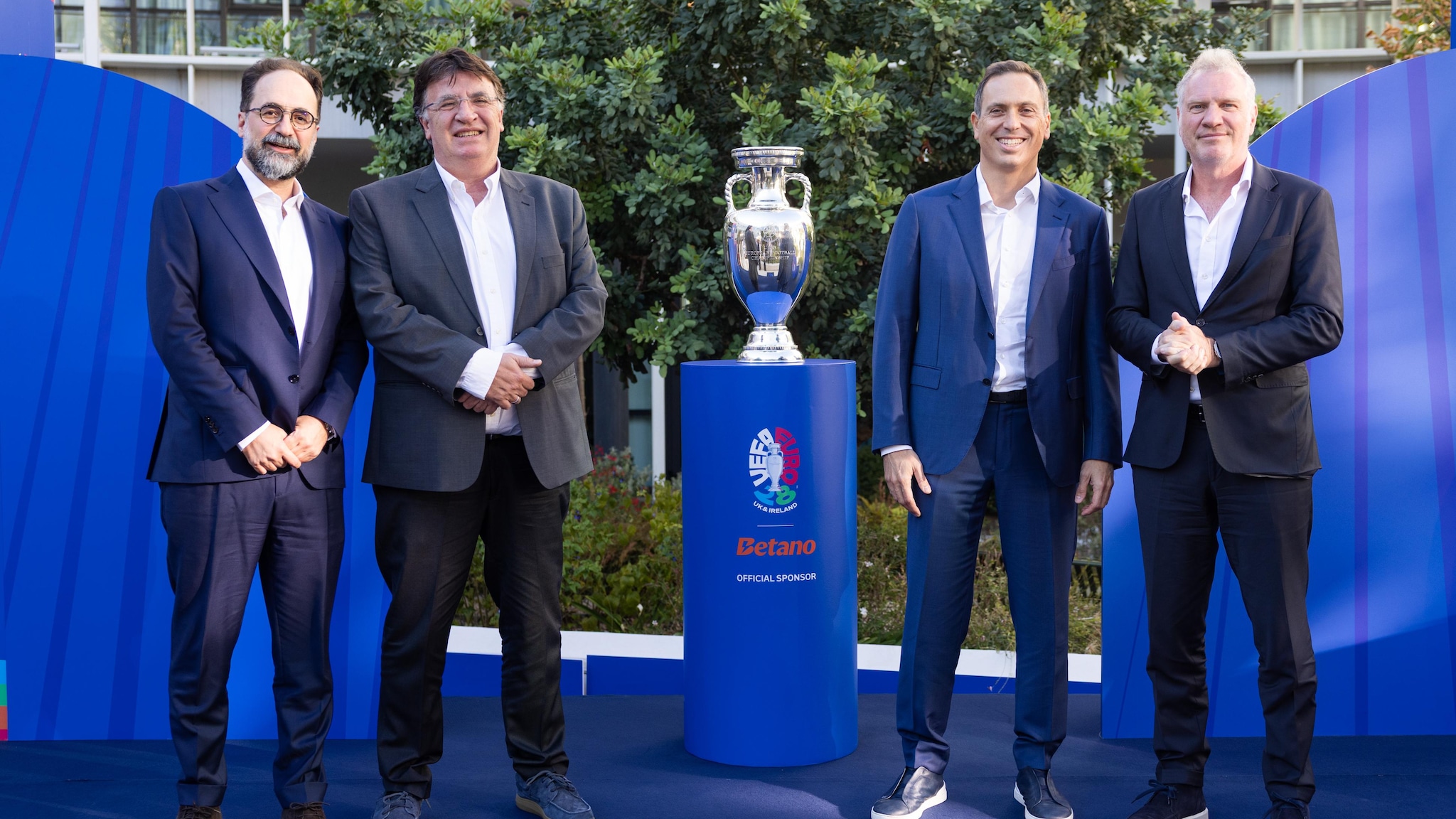
Tottenham took a different route. According to Yogonet, Betano's three year agreement makes the brand the club's partner for the men's first team in 2026/27, with branding on training kit, media backdrops, pitch side LED boards and big screens at Tottenham Hotspur Stadium. From the 2027/28 season through 2029, the relationship turns into an Official Betting Partnership for Europe and Latin America. Inside World Football noted that clubs have shifted to training wear, regional partnerships and stadium advertising to keep betting income flowing within the rules.
Put the three announcements side by side and the logic is clear. Betano holds Europe and Latin America, VSbet holds Asia, and Sportsbet.io holds North America and Africa. Instead of one operator paying for global exclusivity, three now pay for territorial exclusivity.
Regional partnerships are not an invention of 2026. InterGame Online reported in August 2012 that Spurs had named Fun88 as their official Asian betting and gaming partner, which the club then called its first regional partnership in Asia. Daniel Levy, then chairman, said at the time that "over 60 per cent of our global fan base comes from Asia." What has changed is the intent. With the shirt front gone, regional deals are becoming the main way a Premier League club monetises the betting category.
The model works because a football club's audience is global while a betting operator's business is local. Very few online gambling operators hold licences in every major region. A global deal forces an operator to pay for exposure in markets it cannot serve. A regional deal lets it pay only for the fans it can actually convert, and lets the club sell the remaining territories to someone else.
TheLines notes that the Premier League has said around half of its fans live in the Asia Pacific region, which explains why Asia is usually the first territory to be sold separately. It is not only Spurs. Days after the VSbet announcement, Aston Villa named 8Xbet as its official betting partner in Asia, TheLines reported. Inside World Football framed the Spurs move as part of a wider effort to monetise the club's global support through geographically targeted deals, and Invixos made a similar point when it noted that regional agreements allow Tottenham to monetise its international fanbase while giving partners more targeted rights.
For a club, the arithmetic is attractive. Each buyer pays full value for the markets it cares about, and if one operator leaves or runs into regulatory trouble, the other regions keep paying. That is a lesson Spurs learned the hard way. Gambling Insider reported in September 2019 that the club's African betting partnership with 1xBet, signed in August 2018, had been terminated amid an investigation into the operator's global activities.
Without a shirt logo seen by hundreds of millions of viewers, the value of a betting partnership moves from passive exposure to active use of the club's intellectual property. Both Spurs announcements stress digital content and fan engagement rather than branding. VSbet will run regional marketing and digital activations for adult fans in Asia. Sportsbet.io will create content and fan engagement initiatives for international supporters. Paul Wiggins talked about entertainment, experiences and moments, not about logos.
In practice, that means club marks, imagery and access used in regional campaigns and matchday social content. It is content marketing more than signage. The operator becomes, in effect, a regional publisher of Spurs content.
A betting brand that buys regional rights and simply drops the club crest on a landing page will get little from them. The iGaming operators that win will plan activations market by market, with local languages and local football calendars, and will measure registrations and retention rather than impressions. This is where iGaming consulting earns its place: the gap between a partnership that pays for itself and one that does not is almost always in the activation plan, not the contract.
Both agreements also come with a compliance frame. Spurs state that each will be activated in line with all applicable regulations and with football's Code of Conduct for Gambling Related Agreements, which is built around four principles: protection, social responsibility, reinvestment and integrity. Betting rules differ sharply between jurisdictions, as Invixos points out, so a regional deal is only as useful as the operator's ability to market legally in each country it targets.
There is a less comfortable side to the story. TheLines reported that VSbet is not licensed by the UK Gambling Commission, and that some people believe Premier League clubs should not promote unregulated betting brands pitch side. Gambling Insider, writing about a broader policy debate, noted that Sportsbet.io also lacks a UK Gambling Commission licence and referred to its sponsorship of the World Snooker Tour. These deals target Asia, North America and Africa, yet the brands can still appear inside a London stadium.
That matters because the UK government wants to close this gap. On 15 July 2026, the Department for Culture, Media and Sport launched a consultation on banning sponsorship and advertising by online gambling and other gambling operators that are not licensed by the Gambling Commission, according to the law firm CMS. The proposal covers physical advertising, including kit, pitch side and stadium boards, programmes, venue infrastructure and naming rights, at every level of sport and across other sectors too. Online and digital advertising is excluded, because extending the rules there would need primary legislation. The government's preferred option is a fixed start in August 2027, ahead of the 2027/28 season, while a less favoured option would let existing contracts run as long as they end before August 2028.
Gambling Insider reported that, according to the consultation, about 40 per cent of Premier League clubs had a deal with an unlicensed operator in 2025/26. The consultation closed on 9 September and the government expects to decide before the end of the year. TheLines reported that Entain, the owner of Coral and Ladbrokes, strongly opposes unlicensed sponsorship and argues that such operators "often target vulnerable consumers, pay no UK tax".
For the regional model, the impact may be narrower than it first appears. The core of these deals is digital content and fan engagement delivered in other continents, which the proposal as described would not touch. What would change is the stadium exposure. If the ban arrives in August 2027 as preferred, a regional partner without a UK licence would likely lose its pitch side LED boards and any physical branding in Great Britain, even if it keeps every digital right abroad. Clubs and operators signing three year deals today should be building that possibility into their contracts, with clear clauses on what happens to physical inventory if the law changes.
Look at the territories Spurs have sold so far: Europe, Latin America, Asia, North America and Africa. None of the three announcements names the Gulf or the Middle East as a territory of its own. For clubs, that gap is becoming harder to ignore, because the Gulf is the one region where the rules of online gambling are being written right now.
In June 2026, Yogonet reported that the UAE's General Commercial Gaming Regulatory Authority, the GCGRA, had authorised Play971 as the country's first licensed online gambling brand, covering sports betting and casino, operated by Coin Technology Projects, part of Abu Dhabi based Momentum Group. The regulator was established in September 2023. Play971 offers sports betting on international competitions as well as UAE football and horse racing, alongside casino games, and is open only to customers aged 21 and over. Yogonet adds that only GCGRA licensed operators may offer sports betting in the UAE, and that the regulator says it will take a strict approach to unlicensed offshore operators targeting UAE consumers.
That creates a very different partnership market from the ones Spurs has just sold. In Asia or Africa, a club can choose from many internationally licensed operators. In the UAE, the pool of legal partners is, for now, a single licensee. A "Gulf betting partner" would therefore not look like the VSbet or Sportsbet.io model of an offshore brand activating digitally across a continent. It would need to be a locally licensed operator, working within a regulator that has made its view on offshore marketing very clear, and with activation planned around a 21+ audience.
We expect that combination to produce some of the most interesting iGaming consulting work of the next few years. European clubs with large Gulf followings will want to sell the region separately, while licensed operators will have to decide whether a Premier League badge or a regional club offers better value. For brands exploring sports sponsorship opportunities in Dubai, the regional rights model is a useful template: buy only the territory you can serve, and insist on the content rights that make the deal work.
It also has implications for UAE football club sponsorship. As local regulation matures, Gulf clubs may find themselves selling the same kind of category rights that European clubs now carve up by continent, and the questions about licensing, age limits and responsible marketing will be the same.
For clubs, the Spurs approach shows that the betting category is no longer one partnership but a portfolio. The skill is in drawing the map: deciding which territories are worth selling separately, which can be bundled, and how to avoid overlapping rights. A club can now earn from each region, but it also takes on the work of checking every partner's licence and reputation, which is where specialist iGaming consulting support pays off.
For operators, the barrier to a Premier League association has dropped, but the bar for activation has risen. A regional partnership is only valuable if it is used, with a clear content plan and a compliance check in every market. Operators without a UK licence should also watch the outcome of the DCMS consultation, which could reshape what they can display inside British stadiums from August 2027.
For brands outside betting, territorial thinking is spreading. Clubs that carve up betting rights are likely to do the same in other categories, opening space for regional partners in finance, travel or real estate. TRIX20 has looked at similar moves elsewhere, from Brentford and Hollywoodbets to Nottingham Forest and BOYLE Sports and FC Bayern with Mega Casino World. Good brand strategy starts with knowing which fans you can actually reach.
Tottenham has not lost its betting income by losing the front of the shirt. It has broken that income into pieces and sold each one to the operator that values it most. As reported by Invixos, the aim is to monetise an international fanbase while giving partners more targeted rights. Whether the model holds depends on how well operators turn regional rights into engagement, and on how regulators in London and the Gulf treat brands that sell betting and casino products across borders. For the iGaming industry, the map is being drawn one region at a time, and the Gulf is still waiting for its colour.
Sources: Tottenham Hotspur, Inside World Football, Invixos, TheLines, Gambling.com, Yogonet, Gambling Insider, CMS, Osborne Clarke, Insider Sport, InterGame Online, SportsMint Media